
I had the pleasure of making my way through a collection of books I found on a March 14, 2024 piece in The New York Times, “22 of The Funniest Novels Since Catch-22”. There are some great works on there that I have already read, such as Portnoy’s Complaint (one of my all-time favorites), Oscar Wao, American Psycho, and a few others. But there are books on this list that I had never heard of before, or books that I have an extensive relationship with the author’s other works and never even thought to read. This is a compilation of reviews of my comedy romp, deeply influenced by Garner, Jacobs, and Szalai’s great article (with a few other slant recommendations thrown in).
Mrs. Caliban by Rachel Ingalls
A great modern fable reminiscent (and evidently birthed at the same time) of Guillermo del Toro’s The Shape of Water, this short and beautifully perfect novel tells the story of a woman who escapes a marriage under a mountain of resentments to find true love in an otherworldly place. This is one of those novels that have a perfect structure, prose, and story of a light satiric bizarre science fiction nature that turns the mirror on our own world and relationships. Under the surface is a story about what we do to one another, and how relationships can leave a lasting impression of pain, loss, abuse, fear, fear!, and overall uncertainty that can last a lifetime – whether the relationship continues or not. The novel also reflects on the difference between expectations and reality, and the way in which this can poison our view of the world and what ultimately happens to us and those we love.
It was a great novel. Succinct, stylish, and a breeze to fly through in one or two sittings. An escape of pleasure and reflection that is breezy, entertaining, and fun.
Lake of Urine by Guillermo Stitch
Lake of Urine tells the story of Willem Sellers, a guy completely obsessed with measuring his time and his world until he happens upon the unconventional Urine (and highly feminine Noranbole) Wakeling. What comes next is a whirlwind of convoluted fun as Stitch throws us four little winky satires of major storytelling tropes, but in extremely unconventional wordplay, plot play, and random encounters that bring an imaginative and strange approach to the form of novel that I have not seen before. It is hilarious from beginning to end – a story that insists it is true that upends many trends and expectations. While the characterization is somewhat lacking, it becomes clear that the tale itself and the meandering way it is told matter more than anything else. My favorite portion was Emma Wakeling’s take on Noranbole, and the satire of Noranbole’s workplace and suitor prospects. A lot of fun and well worth the time it takes to read. I promise, it is a romp.
Lightning Rods by Helen DeWitt
This was an incredibly sharp satire, and I found myself laughing out loud throughout the read.
Joe is a real loser and can’t seem to figure out why. An expert at sales, he is running out of time and money to make a break in the door-to-door sales of Electrolux vacuums and Britannica encyclopedia sets. But a quick brainstorm brings him his big break – an idea that gets to the bottom of corporate frustration, worker burnout, and corporate efficiency… And at the same time, it allows women to climb the ranks, increase productivity and loyalty, and can even save marriages! This wonderful invention and bathroom remodeling company led him to great international success.
This reminded me of some of the great satires that Charlie Kaufman and Spike Jonze have come up with over the last few decades, and I think that this would make a great film written and directed by them if it ever comes to fruition. This is a shocking, charged story full of commentary on all of the elements of our American society, Joe seems to fix, and it is an enjoyable, hilarious read that isn’t entirely for the prudish. If that isn’t you, you’ll love it. This was on a list of postmodern comedic narratrives that came out this year that I tried to make it all the way through, and it was a great surprise. I also want to note that I haven’t read The Last Samurai and it has moved up my list as I really enjoyed DeWitt’s genius prose and characterization.
Oreo by Fran Ross
Oreo is a semi-autobiographical novel that is one of the most innovative and striking books I have ever read. It tells the story of Oreo, a young woman born to a Jewish father and Black mother in Philadelphia. Throughout the novel we get a Joycean journey of youth, Philly to New York City, in the structure of the Theseus legend. From there, we are treated to linguistic wordplay in English, Yiddish, and Greek. We are treated to hilarious interactions and bawdy vignettes that are truly laugh-out-loud funny, to the extent that I found myself reading passages to whoever was within earshot. This is filled to the brim with allusions and references to America, Judaism, Blackness that still hit, and it is a beautiful time capsule of 1970s culture and exploitation. It is all presented in vibrant, sometimes experimental prose that is impressive and scarce, and reflects the true potential of this imaginative writer for Richard Pryor. Sadly, her time on this earth was so short. This is all we have. I wish there was so much more, but also looking forward to diving in once again.
This book is legendary, and I am so happy it is back. More people should be talking about it.
The Wig by Charles Stevenson Wright
Another was Charles Stevenson Wright’s The Wig, a hilarious and brilliantly woven satire from 1966 about Lester Jefferson, a black man in Harlem whose hair is straightened and lightened to adapt to “The Great Society” of the white American experience. Of course, this experience as a Black man in the turbulent 60s is a unique series of political, racial, social, and cultural upheavals for everyone, but the Black experience is particularly unique as the systems of oppression and discrimination are at the forefront of the dismantling of the old guard – systems we are still struggling to dismantle to this day.
Throughout the piece, everything from the American Dream to assimilation and identity is torn down in humorous, surreal vignettes of beautiful wit and exceptional comedic timing. It holds the mirror up to so much, as if The Bluest Eye and Borat had a strange comedic baby – a baby that reflects the horrors of assimilation and systemic abuse while having the bravery to poke fun at oneself as well. Lester keeps trying to make life happen through an Ignatius J Reillian work search, bizarre characters using him as a prop as much as a fellow human being in a variety of industries like the performing arts, and grotesque, surreal moments that undermine an understanding of the society as much as the self. What would one expect from making such drastic changes to one’s identity in one of the most charged times in our nation’s history?
This was an amazing book I am so happy to have read and experienced. Beautifully funny and intelligent commentary on our delusions of self, freedom, and nationalism.
Sandwich by Catherine Newman
I wouldn’t say I am the number one audience for Newman’s Sandwich, but I did enjoy many aspects of it. It is a funny book about Rocky’s family’s yearly vacation to Sandwich on Cape Cod in Massachusetts – a place I am intimately familiar with having spent many years in Yarmouth, Yarmouthport, Dennis, Hyannis, and Falmouth throughout my life. This particular story is about a menopausal woman’s experience with her family and its history as they contemplate how many more summers they can still do this. From septic system backups to the emotional weight of the protagonist’s stale marriage, to the never-ending messes of the children, we are sent on a female-led situation comedy of a vacation where everything seems to keep going wrong. I would recommend this to anyone that loves comedy and women’s fiction, and like I said, I enjoyed my time with this book but don’t consider myself the target audience. It is objectively very funny in some spots, though! I feel like a better reader and humor writer after having read it and see some great jokes and emotional moments executed in a wholesome, character-driven family story. Reminds me of those somewhat forgettable but funny and enjoyable family dramadies that dominated cinemas in the nineties.
The Secret Life of Adrian Mole Aged 13 and 3/4 by Susan Townsend
This was one of my favorite books on this list. It tells the story of Adrian Mole, an unintentionally hilarious kid growing up in England during the Thatcher administration in the 1980s. What makes this book so funny and so charming is the ignorant adolescence of our main character in sharp contrast to the ironic grandiosity that he sees himself at such a young age. As if Ignatius P Reilly was a little more intelligent and a lot younger, we follow Mole as he navigates some of life’s inevitable macro issues such as his crush on his classmate Pandora Braithwaite, his lofty and misguided literary ambitions with his ridiculously bad poetry, and his resentment of his parents’ marriage as it falls apart and his mother navigates an awkward affair. As any teen, he also obsesses over his self-esteem and image, health (like Reilly), appearance, and social status. In the background Mole experiences but is somewhat unaware of some of the macro global issues that we adult readers notice such as poverty, global conflict, unemployment, interclass struggles, and perhaps the scariest part of growing up, the sheer unreliability, hypocrisy, and lack of control and authority adults have over everything.
This was a thrillingly funny book that has a lot of the elements of some of my favorites with young protagonists awakening to the world – like The Tin Drum, Extremely Loud and Incredibly Close, Catcher in the Rye, The Curious Incident of the Dog in the Night Time, and books of that nature. I will likely continue reading the following books in the series at some point. This was very enjoyable.
The Sisters Brothers by Patrick deWitt
This was easily my favorite book on this list, and one of my top five for the year. The story follows two brothers, Eli and Charlie Sisters, who are bumbling criminals during the California Gold Rush. A character known as the Commodore tasks them with murdering Herman Kermit Warm over some unresolved, unclear debts. They travel along Warm’s footsteps to intercept him, but they are always just a few steps behind and a few wits short of coming upon him. Instead, alcohol, some side quests, and nagging bad luck and bad choices keep them from meeting their target until well into the novel when they learn what the Commodore and Warm’s conflict was truly about: a special chemical potion Warm invented that allows prospectors to easily find gold in any body of water… but at a steep cost.
The humor in this book is infectious and I found myself laughing out loud many times in my reading between the writing, the characters, and the situations they found themselves in. This book also has some wild thematic elements that make it not only an incredible example of the western adventure, but also a solid commentary on what it means to be a brother, the cost of the uniquely American brand of violence and capitalistic greed, the consequences of living a life of crime, addiction, and the value of quiet domesticity. In fact, this book is not just a beautiful embodiement of the western genre novel, but also a stark rejection of it in a sense – that gunslinging and crime are center to this book but also are in many ways the absolute worst way to build a life. Frankly, everything that makes Red Dead Redemption II amazing, but in the form of a darkly comic, violent, and tender novel of breathtaking scope and realism. A beautiful modern take that blows the dust off a tired, old, cliche form.
On another note, I was excited to watch the 2018 film by Jaques Audiard and Thomas Bidegain starring three of my favorite actors in an entirely new role for them. There was such comedic promise in putting Phoenix and Reilly opposite each other in the titular roles of the brothers, and I thought about it a great deal in my mind prior to watching it. I was so disappointed in what I got. There is some beautifully quiet filmmaking happening in the movie, however, it seems like the soul of what made the book so funny was sacrificed in the execution. Furthermore, the order of the film was different than the book, where in the book we are teased with the enigmatic Commodore, the elusive Warm, and John Morris being tracked and revealed at the appropriate times, but in the film tells us the story in not such a limited perspective, and that ruins many of the reveals that keep the book’s narrative on the tracks. I wasn’t expecting a goofy slapstick comedy with everyone falling over, but this interpretation really missed the mark to me in trying to do too much at once, not the least of which includes the art-house editing and cinematography. It is in many ways a good film independently, but not a good film of this book, and with the talent they had on hand I was very disappointed. The only part that worked for me was the ending.
This Christmas I bought at least three copies to give to friends as gifts, and I highly recommend this beautiful, violent, touching book about bad people doing bad things for all the wrong reasons. I look forward to reading it again, as well as the rest of deWitt’s work.
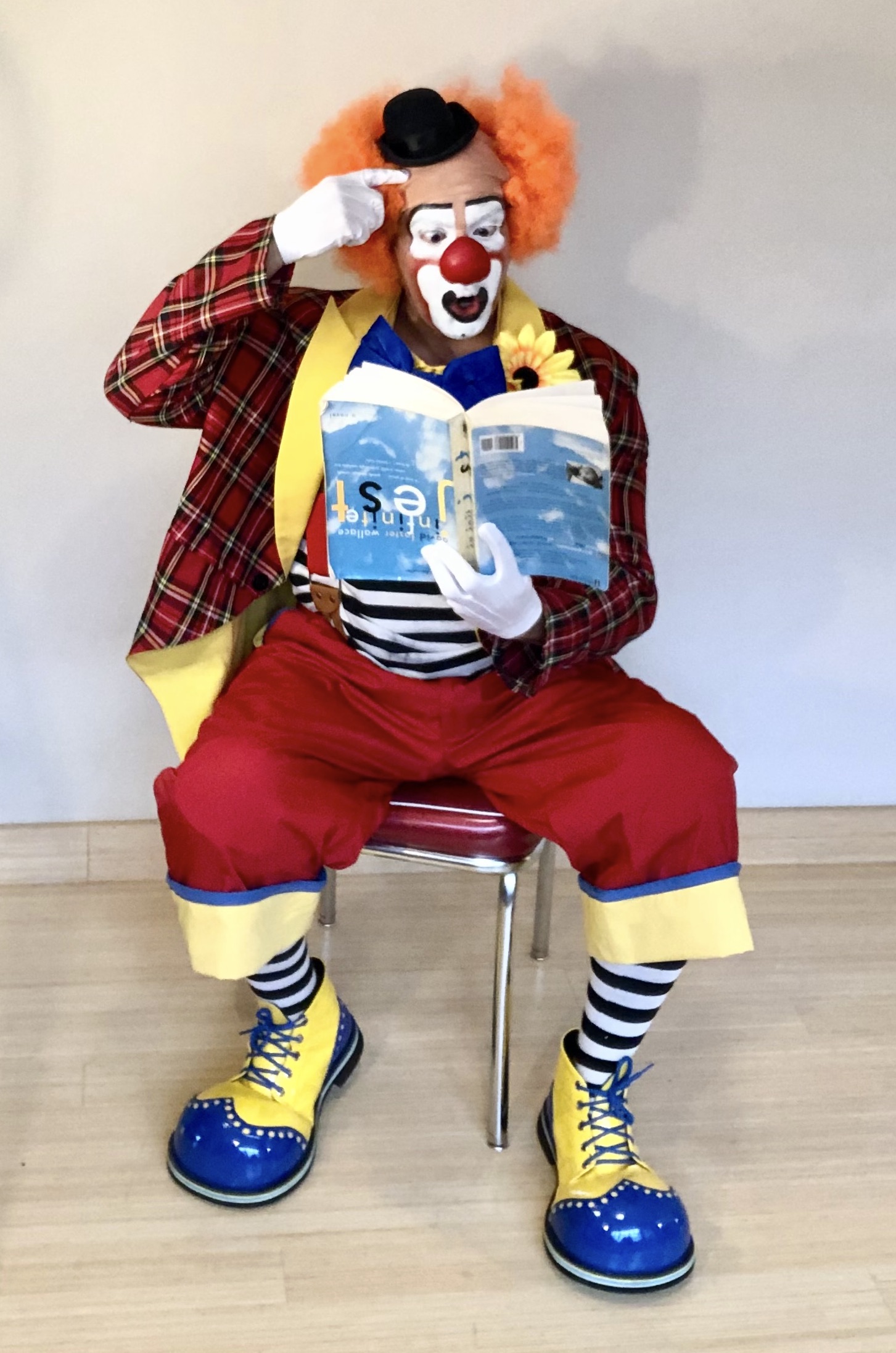
Image courtesy of Splatstheclown, CC0, via Wikimedia Commons

 Garrett Zecker