
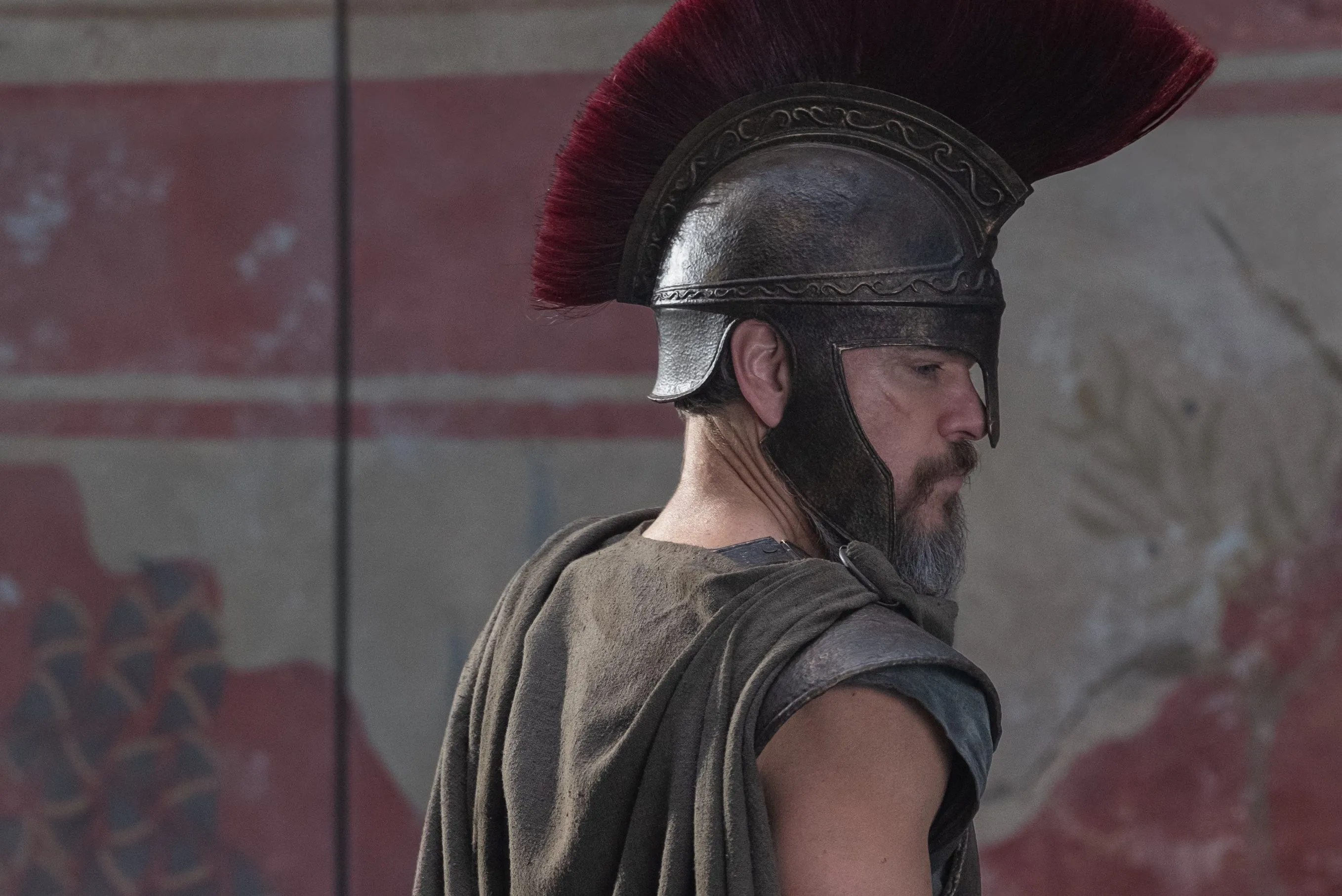
“Come, men of Troy and Trojan women; look upon Hektor if ever before you were joyful when you saw him come back living from battle; for he was a joy to his city and all his people.”
It has been a long time since I read The Iliad. I think my last time was during my senior year of high school, and perhaps even when I was working on my undergraduate literature degree. I also don’t remember which translation I read all those years ago, but in a box of banged-up books from an estate clearance, I found a copy of Richmond Lattimore’s translations of this and the Odyssey. Along with teaching it to some young men and women in the same bracket as I was when I first read it this past spring, I decided to revisit both books in my 45th year.
“All those who are left about from the hateful work of war must remember food and drink, so that afterwards all the more strongly we may fight on forever relentless against our enemies with the weariless bronze put upon about our bodies.”
The Iliad is the classic epic poem of the Trojan War, and explores the semi-factual but mainly legendary exploits of both sides of the conflict in the final weeks. After Helen of Troy is abducted, Achilles has some difficult decisions regarding his response. Through a series of battles that include the various interjections and participation by Greek gods and goddesses, Hector (son of King Priam) is eventually defeated and given a hero’s burial and funeral pyre.
“Zeus builds up and Zeus diminishes the strength in men, the way he pleases… there are harsh things enough that could be spoken against us both, a ship of a hundred locks could not carry the burden… But what have you and I to do with the need for squabbling and hurling insults at each other, as if we were two wives who when they have fallen upon a heart-perishing quarrel go out in the street and say abusive things to each other, much true, and much that is not, and it is their rage that drives them.”
This story is less about the plot-driven elements, as many of them are repeated and repeated throughout the piece, and more about the role of fate and struggling heroism in the life of humanity. Gripping action sequences and gory deaths punctuate the events of the story, with the gods contemplating the effects of their assistance in turning the tide of moments where we struggle to gain a foothold in the darkness of war. They can help, but at what cost, and who is on which side? They discuss this at an Olympian roundtable, bickering and coming to their own blows in examining who lives and who dies, and for what purpose. They even participate at times, guiding spears and bringing some of the warriors back from the brink of death to fight another day.
“The heart in you is iron… Such is the way the gods spun life for unfortunate mortals, that we live in unhapiness, but the gods themselves have no sorrows… They are unlike for the gifts they bestow: an urn of evils, an urn of blessings.”
It is a remarkable work that is truly something to behold, reading in 2025. While the cast of characters is in the hundreds, the most notable elements of the text don’t have to do with the action (which is awesome) or the history, but rather the humanity in the processing of the events. What is it we have control over? What is the meaning of the awful, violent, miserable things we do to each other, and is it even worth it? It’s for the legend, and in reflection of it to our modern warfare (both the emotional and physical kind), it’s remarkable that this one book about the last few weeks of a ten-year war can capture so many moments of true epic momentum and heart. Today, our endless proxy wars solely fought for fattening the wallets of the ultrarich have no glory or meaning, heart or sacrifice for the greater good. They are a terrible, flimsy opposite; none of it should exist to begin with. Reading the epics of the past only magnifies these questions and complicates the answers. Agamemnon, Achilles, and Hector under the watchful gaze of Zeus is one thing, but our sons are another, and it is so miserably sad.
The Odyssey is in many ways a completely different story.
“Telemachos, now yourself being present, where men do battle, and the bravest are singled out from the rest, you must be certain not to shame the blood of your fathers, for we in time past all across the world have surpassed in manhood and valor.”
While The Iliad is an epic of grand, warlike proportions, The Odyssey is much quieter, with fewer characters and a lens that focuses solely on our main character and one of the heroes of the prior book, King Laertes’ son, Odysseus. For twenty years after the Trojan War, Odysseus struggles across the ocean to find his way home. He is often undermined by Poseidon, but is helped by other gods (namely Pallas Athene, aka Athena) throughout his journey to support his just mission back home to be reunited with his son Telemachus and wife Penelope (who has been surrounded by suitors trying to move in on the marriage). This episodic tale takes a very specific portion of his journey through each of the 24 ‘books’ of the story, where he encounters the Cyclops Polyphemus, sea monsters, lotus eaters, giant whirlpools, sirens bent on manipulating his crew to drown themselves in the sea, and many others. While I have taught this text many times, I have often used abridged or retold editions throughout the years, so it came as a surprise in rereading the original that the organization is much different than these retellings. Furthermore, the beauty of the book isn’t in what the kids find to be the most exciting elements (the action scenes – that are understandably the main focus of the mid-grade adaptations), but in the quiet loyalty and camaraderie that define heroism and masculinity in this ancient age.
“I wish you well, however you do it, but if only you knew in your own heart how many hardships you were fated to undergo before getting back to your country, you would stay here and be the lord of this household and be immortal.”
First, the gods and goddesses do not interfere with the actions of our hero very often, nor do they go on and on discussing what the right or wrong thing is for Odysseus to do. They are more spectators, wondering what choices he will make and in what way they can help based on their interpretation of a situation. The directions on how to avoid the sirens’ song, for instance, isn’t so much Poseidon screwing with them (although he is) and is more, ‘this is happening anyway as it has been foretold when he left Troy, so let’s tell him how to survive it… It isn’t going away.’ Only in that way is fate or the gods’ hands involved in anything. Fate is fate. Here, human: here is how to survive this. By the way, by the time you get home, your crew and ship will be destroyed. That’s just the way it is.
“You are the race of men who are kings… no mean men could have sons such as you are.”
Second, Odysseus and his family aren’t just great warriors and honorable (with many superlatives coming before their names at every utterance), but they are clever. Telemachus is destined to be killed when he goes in search of his father, but avoids it because of some quick thinking in the route he takes before turning around and going back home anyway. Penelope has been able to avoid marrying any of the suitors by working all day, every day, on a loom to make a shroud for Laertes, but in the evenings she unravels her work to give her an excuse to perpetually work on her ‘web’ until the men go away. Odysseus, for his part, is constantly outwitting the things coming his way; his Nobody trick with Polyphemus, with him and his crew hiding under the sheep, is the most memorable to me (and I would say my students as well). One thing I didn’t remember, but is kind of nice, is their treatment of strangers and people on the road – constantly bathing the men, anointing them with oils, outfitting them with fresh fleeces and lush mantles for their journey after presenting big feasts and bottomless wine. They knew how to be hosts and hostesses, as Zeus commanded, and endlessly opened their doors, hearts, and generosity.
“How could I forget Odysseus the godlike, he who is beyond all other men in mind, and who beyond others has given sacrifice to the gods…” – Zeus.
But the biggest thing that stands out to me is the concrete, beautifully emotionally mature masculinity among these men, known as the most legendary, manliest heroes of all time and all literature. Odysseus is often given the titles and adjectives he totally deserves: brave Odysseus, kind Odysseus, relentless Odysseus, cunning Odysseus, godlike Odysseus, resourceful Odysseus, and by the end of the story, we are presented with these accolades and superlatives that we foist on any manly man of American Culture in 2025. These are our western values of masculinity in their most ancient, raw form… Except for one major aspect of his character throughout the book that I would say is entirely overlooked in the abridged retellings. The implications for our society’s view of masculinity is, in one word, embarrassing.
“His whole word had not been spoken when his beloved son stood in the forecourt. Amazed, the swineherd started up, and the vessels, where he had been busily mixing the bright wine, fell from his hand. He came up to meet his master, and kissed his head, and kissed too his beautiful shining eyes, and both his hands, and the swelling tear fell from him…”
In 2025 in America, we are exposed to a completely different expectation of masculinity. One that is definitively toxic and perhaps has been for quite some time. Reading The Odyssey has shown the true nature of true masculinity of the timeless nature – that at one point, long ago, one of the greatest heroes of all time (along with the other men surrounding him) hugged, kissed, cried, had empathy, and was not only unashamedly close to other men, but was always the first to engage the emotional world of humanity as children and women do… It wasn’t expressing love that was ever the delineation of the genders; rather, it was war that separated men from women. Doing a little research, and of course, I am not an expert or even a voice on any of these topics, it takes a simple Google to find many articles on the topic that show a clear demarcation in one specific point of history – in addition to their role in war, men became central to the workplace after industrialization. Additionally, during the 19th century, homosexuality had some major negative social moments – the trial and conviction of Oscar Wilde and the development of mental health research that in its early days considered homosexuality as a mental disorder with no clear merit in science whatsoever. Our society developed a resulting paranoia of being classified as homosexual. The result was, through our modern times, generations of men not only villified the prior, but also slowly eroded the emotional maturity, plysical closeness, and empathy among men, fathers and sons, and even enemies that occurs consistently throughout The Odyssey and has for thousands of years. The fear of being considered gay infiltrated every aspect of modern western culture and has done so at the expense of our humanity. What is most shocking is that homosexuality remained a mental illness (professionally) in the DSM until 1973.
“You wretch, so devious, never weary of tricks, then you would not even in your own country give over your ways of deceiving and your thievish tales. They are near to you in your very nature.”
That was my biggest takeaway from rereading this book in my forties. Perspective, education, and experience made a profound impact on my understanding and focus on this text. Less was this story the action scenes as it was of my youth and which still drive the adaptations, and more of a document of quiet intimacy among men, the importance of father-son relationships (and family as a whole), and the decreasing weight of the gods and goddesses interfering in everyday human objectives. There was a beautiful freedom humanity was gravitating toward: one of love and communication, sacrifice for justice and glory, and platonic love among the strongest of our heroic men wasn’t even a second thought to them.
“There the dog Argos lay in the dung, all covered with dog ticks. Now, as he perceived Odysseus had come close to him, he wagged his tail, and laid both his ears back… (Odysseus) secretly wiped a tear away.”
Rereading The Iliad and The Odyssey in 2025, in many ways, was being refreshed to a hyper humanness that is a stark opposite of the nihilism of the online marketplace of these ideas. We have come so far from this, in ways, that racism and homophobia among bulletin board posters, gamers, and trolls have entered a postmodern phase where vitriol and comments have an extremist phase on one end of the spectrum, and the same words are used with humorous ironic sarcasm on the other. The teeth of generations’ hate since the nineteenth century have been knocked out and added to a strange puppet head, all out of order. But what is wild is that it is all based on nonsense made up a hundred years ago.
The gods of these stories, and of our modern era, have disappeared. The love we had for one another has as well. Perhaps the twentieth century and boomer generation of men telling their kids, ‘no son of mine…’ and ‘boys don’t cry’ was the worst point and things are getting better, but it seems like one of the best times was when men were men as we were meant to be – in some ways that I have pointed out in The Odyssey during these times. Similarly, the gods were gods but already fading into legends and handing our experience into our own humanistic independent impulses that all faiths morph into over time. But one thing is certain, as everyone in these two books have attested… Odysseus is a man among men: godlike, fallible, emotionally intelligent, sensitive, but the backbone of the success of the Achaean empire, if only for a little while. The legend and the masculine life it should inspire, it seems, will go on forever. It is a message for the men of today who, in contrast, contradict everything he fought for.

 Garrett Zecker