
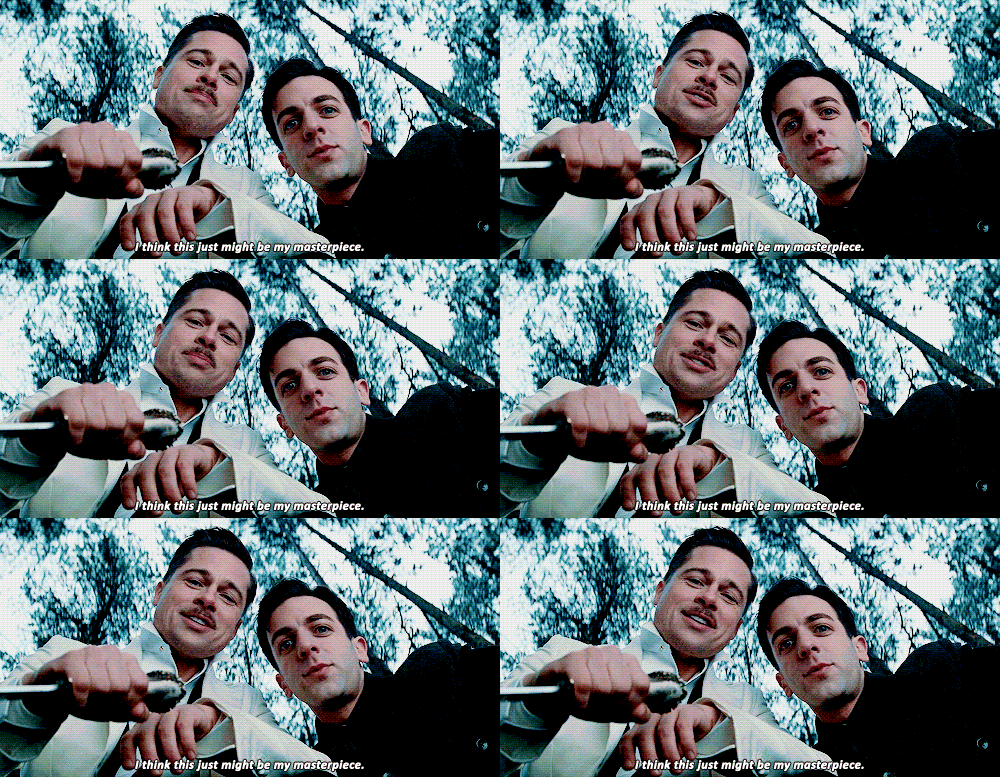
Readers of this blog will note it comes as no surprise that I am a film connoisseur; I am often reading as much as I can about the art of filmmaking as much as I love watching movies. From my own modest Criterion closet to my collection of books and films on the art and the artists (is it even possible to have any more Wes Anderson memorabilia than I do, including an actual issue of The French Dispatch framed above my Criterion box set and Anderson coffee table book?), to screenplays, Save the Cat!, and Robert McKee’s books, I have a deep devotion to the craft.
Cinema Speculation is no different. In it, Tarantino explores what he considers to be his golden age of filmmaking, specifically the films he consumed with his mother and her boyfriend from the late 1960s to the early 1980s. The organization of the book is a little strange—as was that particular timeframe in the industry, when film and how we consume it jumped around wildly. Thus, the book jumps wildly too, covering everything from race to censorship to sex to distribution, and everything in between. Between politics, the Hays Code, the advent of home video, plunging production costs on one end, and soaring blockbuster production costs on the other, the rollercoaster that brought us to where we are today is a truly mind-boggling labyrinth of perfect coincidences contrasted with troubling governmental interference.
His list of films and filmmakers truly shows how eclectic and earth-shattering he considers these big moments to be, highlighting the artists who changed the art forever and heavily influenced his own work. He dives into films like Bullitt, Dirty Harry, Taxi Driver, Rolling Thunder, Escape from Alcatraz, The Getaway, Deliverance, and The Outfit, alongside deep dives into icons like Clint Eastwood, Steve McQueen, Robert De Niro, Martin Scorsese, Brian De Palma, Don Siegel, Sam Peckinpah, and Paul Schrader.
He uses these figures in a strange, meandering framework to discuss how he became Quentin Tarantino, presenting a critical approach to which performers and films deserve classic status, as well as those he thinks are tremendously overrated. He examines some of them scene by scene or performer by performer, while also explaining which aspects are memorable to his personal life. He is deeply well-read in the breadth and depth of all cinema, a passion that exploded when he worked at the video store, Video Archives. He had access to everything in an era where repertory cinemas were still regularly screening classics, and his mother allowed him to see adults-only films way before he should have been able to, passionately discussing them with anyone who would listen.
So what is it? Is it a book of criticism? A memoir? A history? It is all of these and more. It certainly isn’t objective, almost feeling more like a masterclass lecture where he just wanders through his life and extensive knowledge to deliver life stories, critical opinions, and explorations of the morally ambiguous, gritty, and daring moments that influenced his work the most.
It is a great book that is for fans as much as it is for artists, film experts, and lovers of personal stories set during a truly standard-shattering time in film history. Fantastic, confounding, and brilliant, we get to walk inside his head and his past for just a little while to experience everything that makes him what he is—a man who chiseled and elbowed his way into the career he always dreamed of, and who made us all experience life a little more vibrantly because of his work.


